ELECTRICAL CONTRACTING NEWS (ECN) FEATURE (SOFTWARE & APPS)
APRIL 2026 ISSUE
Dave Carr, Managing Director at Propeller, explains how cloud-based software is helping electrical contractors to overcome productivity pressures and complex regulatory demands.
Demand for electrical contracting work is rising, but so is the complexity of delivering it. Tighter regulation, higher client expectations and growing workforce management pressures mean the operational infrastructure supporting a contracting business matters more than ever. For many, the systems currently in place are struggling to keep up.
The compliance shift
Navigating rapidly evolving regulation is one of the most pressing challenges contractors face. Nowhere is this more acute than in social housing, where legislation has shifted considerably in the last three years alone.
The Social Housing (Regulation) Act, Awaab’s Law and Tenant Satisfaction Measures (TSMs) are driving greater responsiveness, transparency and tenant engagement. In practice, this means contractors must now demonstrate performance across a growing range of metrics with speed of response, first-time fix rates, tenant communication, and compliance documentation all under the spotlight.
Electrical safety rules for social housing are also aligning with the private sector. These include a requirement to inspect electrical systems every five years and to ensure tenants receive an Electrical Installation Condition Report (EICR) within 28 days of inspection or before moving in.
For a contractor managing hundreds of social housing properties, the cumulative effect is substantial. Engineers and support teams face more tasks to manage across multiple clients, each with their own reporting expectations, significantly increasing administration.


The operational ceiling
Meeting these demands requires the right tools. Relying on manual processes such as spreadsheets is time consuming and prone to error. Similarly, using multiple or outdated IT platforms can be counterproductive, making it more difficult to keep track of inspections, compliance status and engineer performance.
Job scheduling is one area where inadequate systems can create a negative impact. Engineers may be assigned to jobs that don’t align with their skillsets, or they are not fully prepared for, risking delays, repeat visits, or incomplete repairs. In some cases, engineers must travel long distances between appointments, driving up costs and reducing overall productivity.
Missed appointments and no-access visits add to these challenges, creating a chain reaction that goes beyond a wasted journey. A no-access visit creates extra administration for support teams responsible for rescheduling jobs, increases the risk of missing EICR deadlines, signals ineffective tenant communication, and can show up negatively in TSM scores.
For ambitious contractors, these inefficiencies can create commercial challenges too, limiting how far and fast a business can grow.
Working smarter at scale
Cloud-based job management software is increasingly central to how contractors are addressing these pressures. Delivered via a Software as a Service (SaaS) model, this technology is accessed online rather than installed on a computer or server, requiring no specialist IT resources.
Recent advances include the introduction of intelligent scheduling tools, enabling thousands of planned maintenance appointments to be booked in bulk, up to three months in advance and within seconds.
Artificial intelligence (AI) continuously analyses the workforce to optimise workloads. Appointments are allocated based on factors such as skillsets, travel time, and the job’s estimated duration, meaning the right engineer reaches the right property. Over time, the system learns from this data to further enhance efficiency and increase first-time fix rates.
Compared to conventional scheduling methods, this approach can reduce operational costs by up to 40 per cent. It also has the potential to cut travel costs by up to 25 per cent and lower carbon emissions through more efficient routing.
For reactive maintenance, an integrated scheduling window gives support teams an instant view of available slots eliminating the need to manually check engineers’ diaries or maps. Appointments are graded based on the cost of the visit to help guide decisions. The technology can also be configured to automatically schedule complex jobs requiring multiple trades on different days.
The full picture
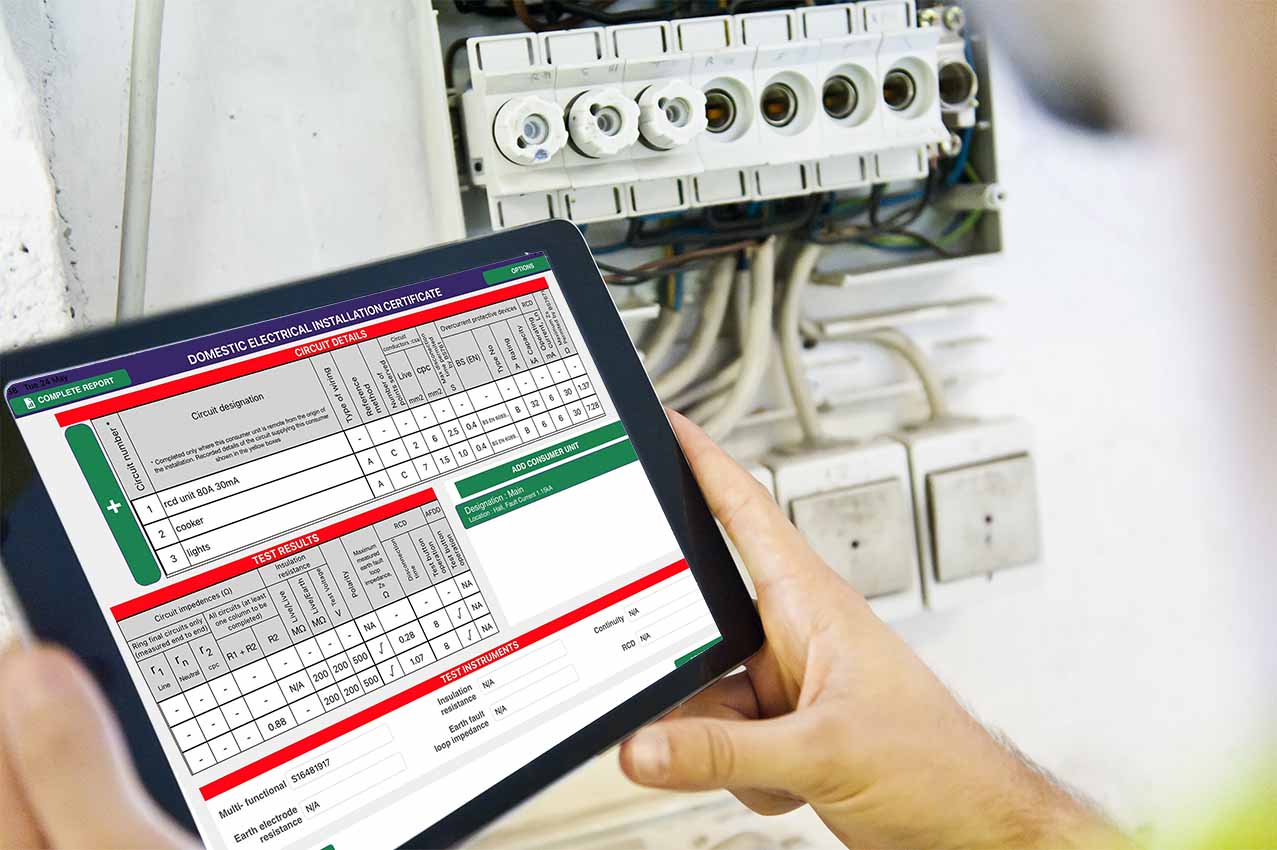
Job management software can combine with a mobile app to improve site efficiency. Engineers can access key information for each property such as photographs of appliances, certifications, and details of previous repairs. Gas and electrical certificates can be validated on site, documentation updated in real time, and materials and costings logged immediately, reducing the risk of incomplete paperwork and unnecessary return visits.
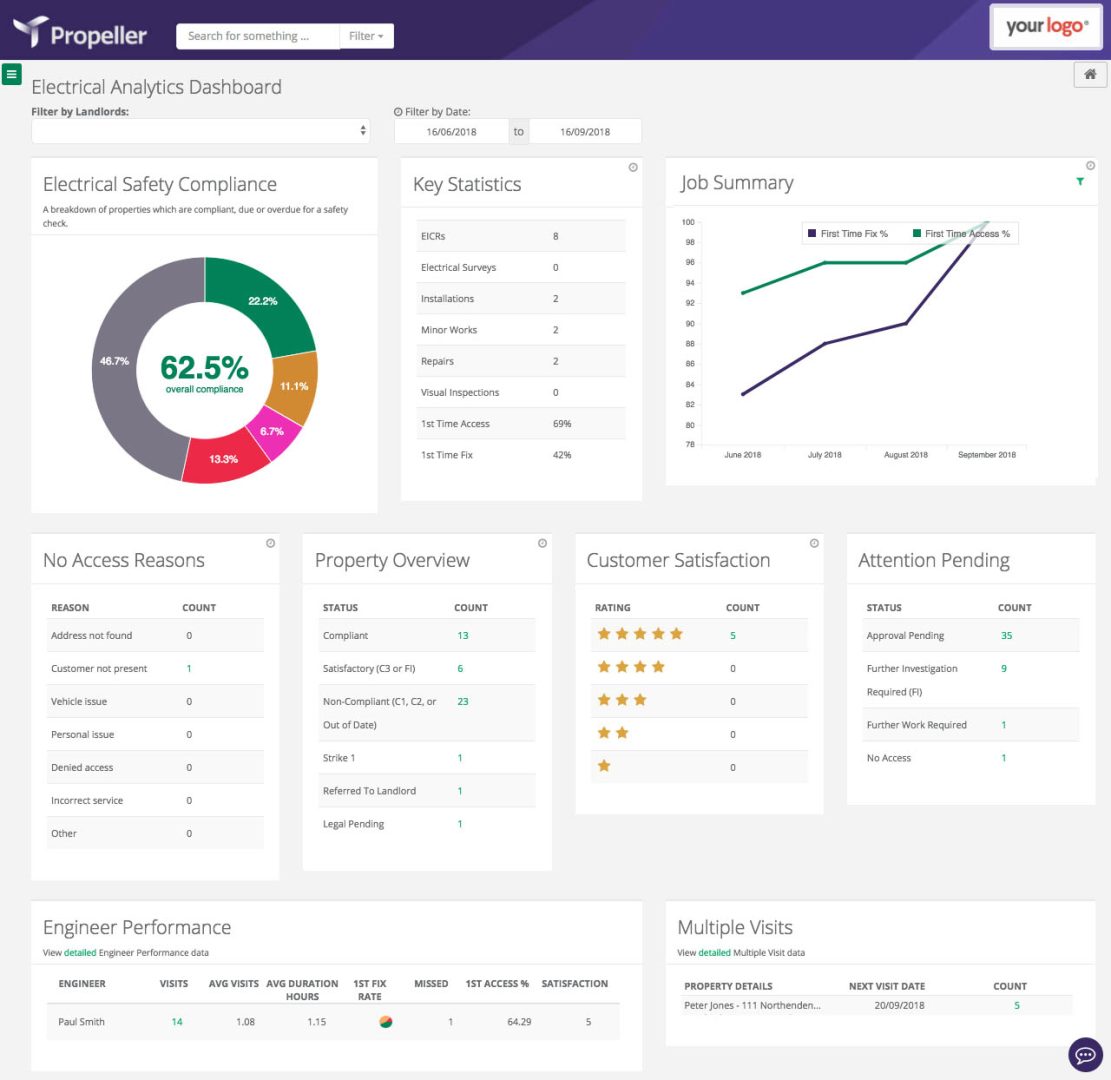
Data captured in the field is consolidated into a central analytics dashboard, providing real-time visibility across key metrics including compliance status, engineer performance, no-access reasons, and customer satisfaction scores. For those working with social landlords, this provides the reporting infrastructure needed to evidence performance against contractual and regulatory obligations.
Fulfilling new requirements
Despite the growth of digital communication, post remains the primary channel for formal housing safety correspondence, from appointment letters to certificates. In line with changes to electrical safety rules and tenant engagement obligations under the Social Housing (Regulation) Act, it is vital this documentation reaches tenants promptly and can be evidenced.
To meet this need, job management software can now incorporate integrated postal functionality, enabling compliance documentation, including EICRs, to be bulk mailed directly from the platform with full tracking from dispatch to delivery. This removes a process many contractors currently manage through external mailing houses, which typically requires someone to manually transfer documents and often leaves no internal record of what was sent, when, or to whom.
By integrating the postal service directly into the job management workflow, the entire process is automated resulting in a robust audit trail. This gives contractors – and social landlords – the evidence they need to demonstrate compliance while giving tenants confidence their housing provider is communicating promptly and transparently.
Closing the no access gap
To address the persistent issue of missed appointments, two-way SMS messaging is becoming a valuable tool for contractors managing high volumes of servicing and repairs. This functionality can be integrated into job management software, improving access rates, customer communication and engineer productivity.
The ability to bulk-send SMS reminders for servicing and repairs, which can be filtered by appointment date, significantly reduces manual administration within the appointment management process. Tenants can confirm or request to change appointments in real time, automatically triggering the required scheduling action, and engineers can send arrival notifications to keep tenants informed and reduce the likelihood of no-access visits.
The right foundation
The operational pressures facing electrical contractors are not going to ease. Regulation will continue to evolve, client expectations will keep rising, and workforce management will remain complex. The contractors best positioned to grow are those with the technology in place to overcome these hurdles without negatively impacting their performance.
Cloud-based software won’t solve every challenge, but it removes the operational ceiling that manual processes and fragmented technology impose, and creates the base on which a scalable, compliant contracting business can be built.


